Showing posts with label spring. Show all posts

Friday, May 27, 2016

Snap-Pea Tee-Pee

Get it, snappy (snap-pea) tee-pee.  A sign my jokes are bad is that I have to explain them.

-----

We have no shortage of unwelcome saplings on our property so when we cut them down I recycled them into a tee-pee for our viney legumes.


I left an opening on one side only because I think it would be cool to go inside it once it is covered with plants.  Kids will like it anyway.


One little pea finding its support.

Arch 'gate' is also made of cut down sapling.  I planted Sweet Peas to grow up this.  Hopefully vines will improve its crocked appearance, oh well....

Things are behind here in regards to peas and other cool weather crops.  It has been a cool spring so I am not sweeting it, literally.    Though you can't see them lettuce, beets, spinach, cilantro, leeks, onions, carrots and white potatoes are also hiding/sprouting in there.


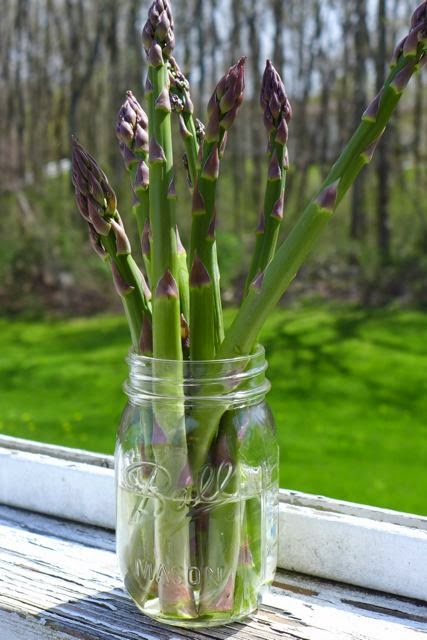
And the asparagus is still making its presence known, getting 1or 2 meals a week from it.  We will keep cutting it until the spears start getting smaller in diameter (the diameter of a pencil or smaller), showing we need to let it 'go' so it can start storing energy for next year.

Duckies growing very fast, but still cute.  I think they are about 4 weeks old?  Staying outside all the time now (biting my finger nails when I think of the raccoon and weasels, hard to keep them out).


We also doubled our chicken flock, adding 7 more Production Reds (RI Red/Delaware crosses) to the mix.  The initiation hasn't been that bad, as the older hens are not torturing them too much.  The farmer who raises these from hatchlings always trims their beaks to keep the peeking attacks on each other less harmful. Notice the size of the red combs on their heads, I hear you can tell how close one is to laying their first egg by the size and how red it is (it gets larger and more red).  I anticipate these will start laying early to mid summer. (14 eggs a day).

The older ladies are all enjoying the longer days and each are finally giving us an egg a day. (During the winter, shorter days, not all of them lay eggs daily.  The Production Reds are our most consistent.)


That is it for now, stayed tuned for exciting piggie news (it is exciting to us anyway).

Friday, April 22, 2016

So It Begins.....

Warm and dry enough weather has allowed us to start working on our little homestead's most valuable resource, DIRT.  The first warm work day is always exciting-


We bought a plow off Craigslist recently that has helped us with turning spring soil.  This has been on our wish list since we got our small tractor.


The plow flips over a strip of ground instead of churning it like a tiller.  Once the soil is 'flipped' all plant growth (weeds and our Winter Rye here) that was on the top is now underneath a clump of soil, which will cause it to die and rot due to the lack of sunshine.  I hear it helps warm the soil quicker as well.  Almanzo said so in Farmer Boy anyway.


Little man whacking away at the ground-

We will let this sit for multiple weeks then break it up more with out rototiller while we add compost.  We also turned over another plot in the back of our property; it was pure sod and our rototiller would not have been as effective.  It would've just churned the grass around and likely left plenty in tact to survive.  We added a tarp for extra killing.  BE GONE GRASS!

We are planning to make this our sweet corn and gourd patch (gourds for making bird houses; this variety here).  If all goes well I hope to possibly paint and sell these.

Food is already making its way out of the ground.  We should have enough asparagus to make a dish THIS WEEKEND!

Seedlings continue to sprout!


Lots to do, lots to do.

Needless to say I am glad for the return of the warm spring sunshine.... and also because of these thingies just installed on our roof.

We recently had solar panels installed on the back of our house.  Our property apparently was a prime candidate for benefitting from solar panels due to the way the backside of our roof faces (towards the south).  We had multiple solar companies stop and try to get us to sign up with them.  We choose a local company and went with the buying option instead of renting them; that way we received the SRECS (Solar Renewable Energy Credits).  The loan for purchasing and installing will be paid off in 5 years from the energy savings and then we will make money from the SRECs.  If you have other questions about these let me know or better yet just talk to my husband. :)

Off to gather some eggs and check for the second time today if my carrots have come up.... because I have a patience problem.


Wednesday, April 6, 2016

What Does April SNOW Showers Bring?

I assume April snow showers bring flowers as much as rain.... since it is essentially rain that waters the soil.  I keep telling myself that the thawing and refreezing of the ground is probably good for our soil; all the freezing/expanding then melting of organic matter.  It is my optimistic way of looking at things.

Truth is, spring in New England is always a little trying on me.  It is a muddy, cold season.... but with hope.  There is a short period in May it is lovely, then comes full on summer.  But with summers at beautiful beaches and a nice fall we make up before winter comes again.

Sunday was officially 6 weeks until our average last frost (according to the Rhode Island Master Gardeners, May 15 is the date).  I was supposed to be transplanting my onion seedlings this week.

Since we got about 5" of snow, I think it is best to wait.  Cold and frost don't hurt more mature onions growing, but it could cause rot to the young ones when when they thaw out (so I read).

Here are our garlics we planted last fall.  The plan is to grow all bulb and root vegetables (except potatoes) in raised beds after this year.  Our soil is compact, and cool muddy springs have not been good to our bulby friends.


The chives don't seem to mind though.  Love me some chives.  Low maintenance, great with eggs, come back every year and beautiful purple, edible flowers.  I promise those are chives and not grass.  If they are we have been eating grass on our eggs.


Holy basil in sprouting, yearning for some sunshine it seems.


It will soon be joined with some cucumbers, more basil varieties and flowers.
I am actually growing flowers this year because I made more money (at our roadside stand) last year on flowers than I did my heirloom vegetables.  Doesn't make a ton of sense but I guess you need to learn your market.

Birds are scavenging for food on Little Lady's homemade bird feeder.


Since my spring snow pics are not very exciting, closing with some more lovely ones from a New England photographer I really like @ - http://www.anewenglandlife.com


Wednesday, June 10, 2015

WHY You Should Grow Your OWN Asparagus!!

I initially named this post Asparagus For The Best Of Us (yes Festivus/Seinfold wannabe knockoff, though not as witty, I know), but thought people wouldn't catch what I wanted to say:

Which is-  Plant asparagus once, eat it for life.
Note: I was an ok asparagus fan until I ate fresh asparagus, its so tender and way more tasty.  Our kids even eat it.

Asparagus is a perennial which means it keeps coming back, ON ITS OWN!  That's right, you plant the roots once/do the work once/sweat a little bit once/schedule a little time out of your day once/dig a hole once/did I mention you do it only once and you get fresh asparagus to eat every year after*.   Thats it!  From what I have read, plants can produce for up to 25-30 years!
*depending on the maturity of the plants you might have to wait a year or two before you can harvest.

Lets start at the planting part, that you only HAVE TO DO ONCE.  And note I am not the local asparagus expert, Jonathan and his Dad are and Jonathan actually planted it.

Step 1.  First you order some asparagus crowns/roots.  I believe it is recommended to get 2-3 year old crowns which will allow you to start picking them sooner.

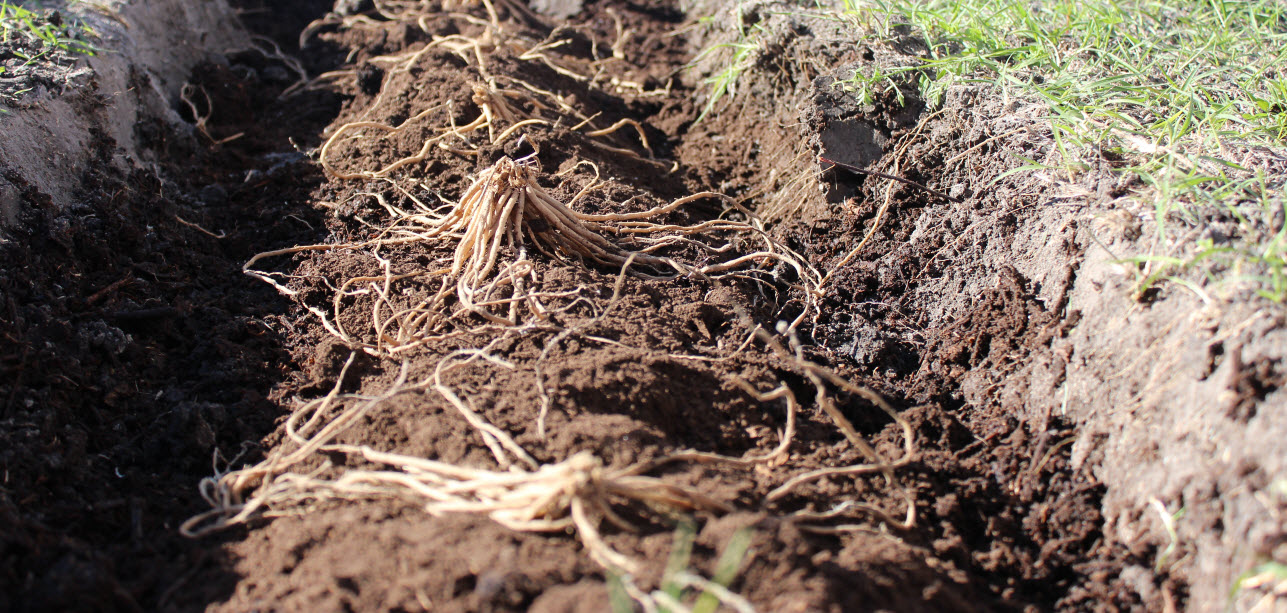
Step 2.  Dig your trenches per your crown's growing instructions (different varieties are different) and follow soil prep instructions.  Doing it right the first time will give you healthy plants for YEARS to come.  We added compost and some phosphate (easy to find at garden stores) to the bottom of the trench to encourage root growth, that's all.  The below photo is of a different variety than ours that did not need as deep of a trench.

http://masterofhort.com/tag/planting-asparagus/

Step 3.  Cover the roots, wait and keep weed free.  We mulch on top of the row with chopped up leaves from the fall, straw would work too.

Step 4.  In early spring watch for the light purplish noses to pop up.  It's an exciting moment.  Here in New England they pop up around mid April.  Not sure about my parent's asparagus in Tennessee, I assume earlier.


Step 5.  Cut the asparagus spears when they are about 5" to 7" tall and over a half an inch in diameter (is the rule of thumb I have heard).  First year and second year, if you planted mature crowns, go very easy on the picking.  We picked just a few bunches worth the past few years.  The third year I hear you can harvest for up to three weeks.  Read up on it yourself though because, as I said, I don't count myself as an expert.

Step 6.  Let it go.  That's right (and not talking about a solo on a North Mountain), let the plants go and grow.  They will get around 4'-6' tall but are absolutely beautiful.

Our asparagus bed in the morning-


Step 7.  Enjoy the seasonal foliage, keep bed weed free and wait till next spring for more free food.
Red 'berries' late in the season

I don't know much about growing it in restricted garden space (such as containers) but I have seen pictures of it.... so it's maybe worth a looking into if that might be your only option.

Hope you jump on the asparagus train.  Woowooo!


Wednesday, May 20, 2015

Eat More Weeds

I have reached Level 5 of Domesticism.  I can't quite place a symbol figure for this level but Level 8 would be Ruby, from the book/movie Cold Mountain:

Level 9 would be Christy.


And Level 10 would be Caroline Ingalls (from Little House On The Prairie):

But I figure if I were to reach these upper levels I would have to be without electricity or internet so you would not hear of my rise in skill sets.  So if I drop off the grid you can secretly cheer for me and  and think of me hunting out road kill and eating dandelions.

So back to eating weeds.  I truly am promoting it (only if you properly educate yourself first, oh and promoting only the legal ones too).
This past Christmas Jonathan fueled my strange hobby endeavor by getting me this book:

I have found herbology to be pretty interesting.  No, I don't wear tie dye and ankle skirts (though there is nothing wrong with that), but I like history and I like plants... and I like self sufficiency so herbology is a good study for me.
Don't worry, I am not turning on modern medicine.  And I am not making any crazy and possibly dangerous tinctures, I don't plan to go that far.  But I did pick some wild violets in our yard this spring and seeped them in oil to make a soothing skin oil.  If you think that is weird then look at the ingredients in your lotion, does it contain aloe, then you rubbed the guts of a plant on your skin too.


Other medicinal herbs/plants/weeds you are probably consuming include rosemary (digestion, circulation), thyme (antiseptic, good to treats colds), garlic (digestion, circulation and more), oregano (antioxidant, antiseptic) and oats (soothing).... just to name a common few.  Herb's medicinal compounds are extracted and used everywhere.  One for example is thymol, a compound extracted from common thyme, is used in mouthwashes such as Listerine (source).  I could also say something about mint, licorice and marshmallow, all once sweetened and used medicinally.... now just an artificial flavor added to corn syrup for a candy.

So back to weeds, these are medicinal plants I discovered growing in our yard:

(All the medicinal notes are summarized from Making Plant Medicine book, as mentioned above, by Richo Cech.  I am NOT a doctor nor do I claim to be, so therefore don't take my word for these things.  I encourage you to research this stuff on your own if interested in personal use.)

Cleavers:
These guys were found growing near our water facet, guess they are moochers of the drippage.
Cleansing of the lymphatic and urinary tract system and blood.  A strong diuretic used helping with urinary tract problems (such as kidney stones).  I picked some, dried it (on an awesome homemade Christmas present from my sister-in-law) and made my husband drink it in some tea.  He lived.... and had to pee a lot, so I guess it worked.

Drying

Lady's Mantle:
This lovely flowering plant was already planted in a flower bed next to the old koi pond.
Appropriately named, good for general women's health.  Books says helpful in toning reproduction organs, good pregnancy tonic, postpartum relief, mood swings and other womanly problems (cause y'all know we gots the problems) .  Apparently a popular tea still for women in other countries.


Echinacea:
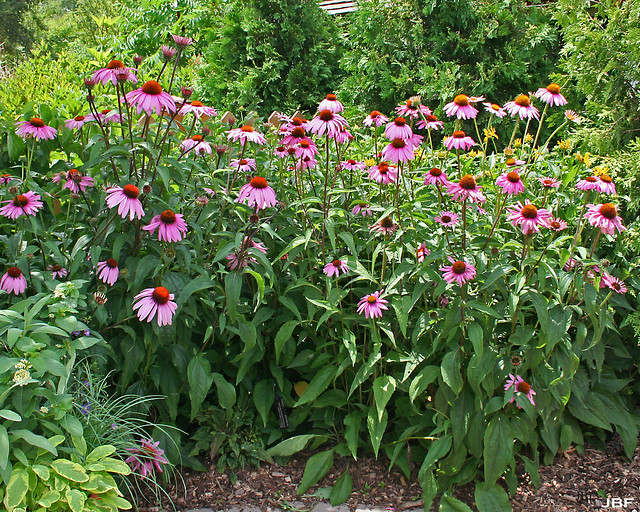
An immune stimulant that increases overall disease resistant.  This tea actually taste pretty good (I buy the tea instead of making it myself).


Violets:
We have violets growing all though out our yard.  I know its not lush grass but it gives a nice color in the spring.
Cooling and healing, for either internal or external issues; upper repository infections to skin problems.  This is what I made my skin oil from, as mentioned above.


Stinging Nettle:
This guy hangs out in our asparagus patch.  
Nettle is a nutritive tonic, apparently high in chlorophyll, potassium and calcium.  The fresh herb can be used for making beer.


Chick Weed:
This guy pops up everywhere there isn't grass I feel like.
Increases energy levels and fat metabolism.  An excellent hen feed, increasing eggs size and production and even the nutritional value of the egg.  Guess thats the reason it takes over flower beds and gardens even when thought it was properly weeded the season before.... because it needs to pulled up and eaten by a human or a hen.


Burdock:
This big ugly monster is not welcome in our yard, but he is persistent.  The spiny burrs freak little lady out every time she discovers them attached to her, thinking its a spider.  So on top of medicinal properties it is helping her over come some fears.
Used in treating staph infections, impetigo and other ulcerations.  Combined with dandelion or yellow dock could be used to treat psoriasis, eczema, oily skin, boils and gout.
Plant in spring
Burs later in season
That is all I discovered for now.  To answer your question, no, I am not out grazing on all fours on the weeds throughout our yard.  And don't worry the kids and I don't try anything without testing it on Jonathan first.  So far he is doing fine. ;)