Showing posts with label asparagus. Show all posts

Wednesday, June 10, 2015

WHY You Should Grow Your OWN Asparagus!!

I initially named this post Asparagus For The Best Of Us (yes Festivus/Seinfold wannabe knockoff, though not as witty, I know), but thought people wouldn't catch what I wanted to say:

Which is-  Plant asparagus once, eat it for life.
Note: I was an ok asparagus fan until I ate fresh asparagus, its so tender and way more tasty.  Our kids even eat it.

Asparagus is a perennial which means it keeps coming back, ON ITS OWN!  That's right, you plant the roots once/do the work once/sweat a little bit once/schedule a little time out of your day once/dig a hole once/did I mention you do it only once and you get fresh asparagus to eat every year after*.   Thats it!  From what I have read, plants can produce for up to 25-30 years!
*depending on the maturity of the plants you might have to wait a year or two before you can harvest.
Lets start at the planting part, that you only HAVE TO DO ONCE.  And note I am not the local asparagus expert, Jonathan and his Dad are and Jonathan actually planted it.

Step 1.  First you order some asparagus crowns/roots.  I believe it is recommended to get 2-3 year old crowns which will allow you to start picking them sooner.

Step 2.  Dig your trenches per your crown's growing instructions (different varieties are different) and follow soil prep instructions.  Doing it right the first time will give you healthy plants for YEARS to come.  We added compost and some phosphate (easy to find at garden stores) to the bottom of the trench to encourage root growth, that's all.  The below photo is of a different variety than ours that did not need as deep of a trench.
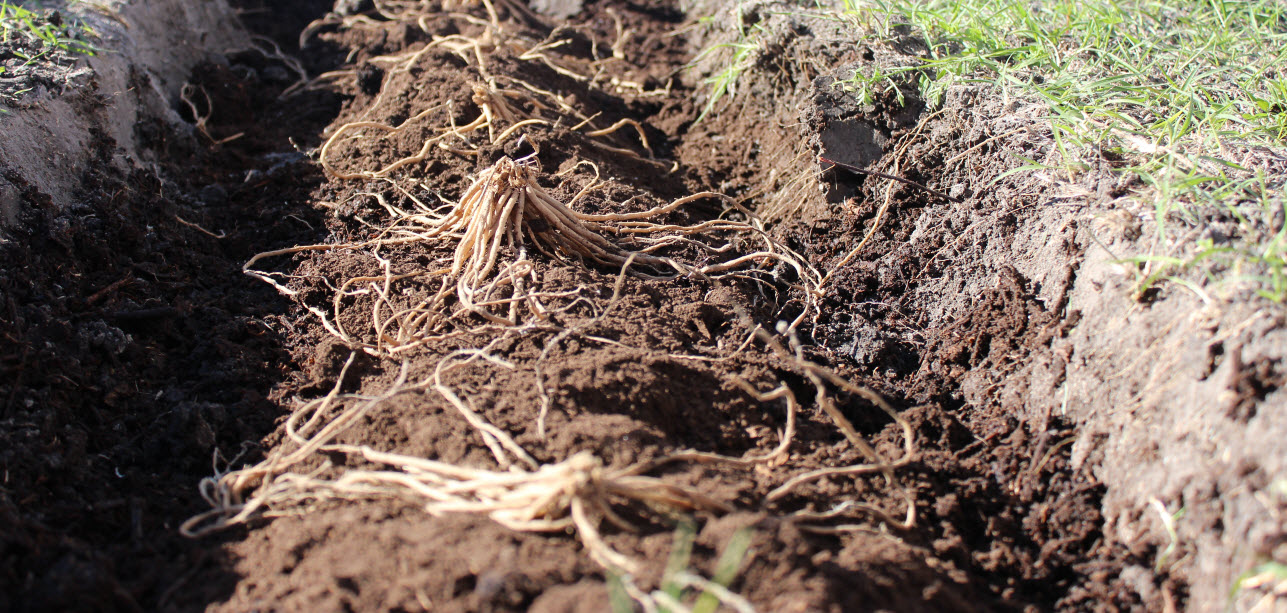
http://masterofhort.com/tag/planting-asparagus/

Step 3.  Cover the roots, wait and keep weed free.  We mulch on top of the row with chopped up leaves from the fall, straw would work too.

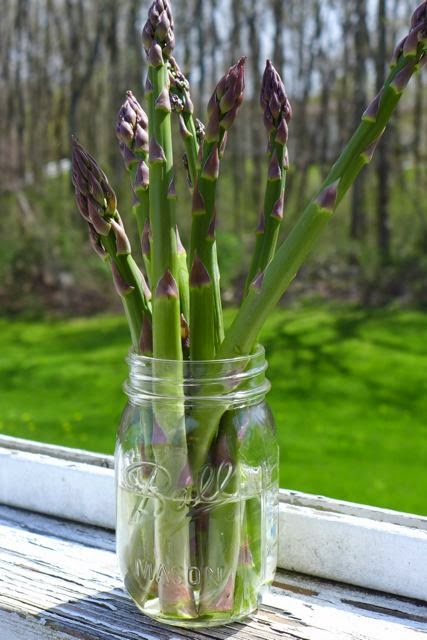
Step 4.  In early spring watch for the light purplish noses to pop up.  It's an exciting moment.  Here in New England they pop up around mid April.  Not sure about my parent's asparagus in Tennessee, I assume earlier.


Step 5.  Cut the asparagus spears when they are about 5" to 7" tall and over a half an inch in diameter (is the rule of thumb I have heard).  First year and second year, if you planted mature crowns, go very easy on the picking.  We picked just a few bunches worth the past few years.  The third year I hear you can harvest for up to three weeks.  Read up on it yourself though because, as I said, I don't count myself as an expert.

Step 6.  Let it go.  That's right (and not talking about a solo on a North Mountain), let the plants go and grow.  They will get around 4'-6' tall but are absolutely beautiful.

Our asparagus bed in the morning-


Step 7.  Enjoy the seasonal foliage, keep bed weed free and wait till next spring for more free food.
Red 'berries' late in the season

I don't know much about growing it in restricted garden space (such as containers) but I have seen pictures of it.... so it's maybe worth a looking into if that might be your only option.

Hope you jump on the asparagus train.  Woowooo!


Monday, May 11, 2015

Is It Officially Spring!?

"I declare that spring has finally sprung!"


And man oh man we are off and running.... maybe a little too fast.

Surprisingly, we got the garden turned over probably earlier than we EVER have.  I haven't checked any stats but I think this has been a dryer spring than normal, hope that trend does NOT continue into summer.  Nevertheless, it is always exciting to get the initial dirt turned over... to let it sit while the weeds rot for the final tilling.  Good husband-


We did plant plenty cool weather plants and hope to be enjoying some of those in the coming weeks:  beets, carrots, radishes, leaf lettuce, collards, leeks, cilantro, red spinach and sugar snap peas.  I also got some red seed potatoes in.
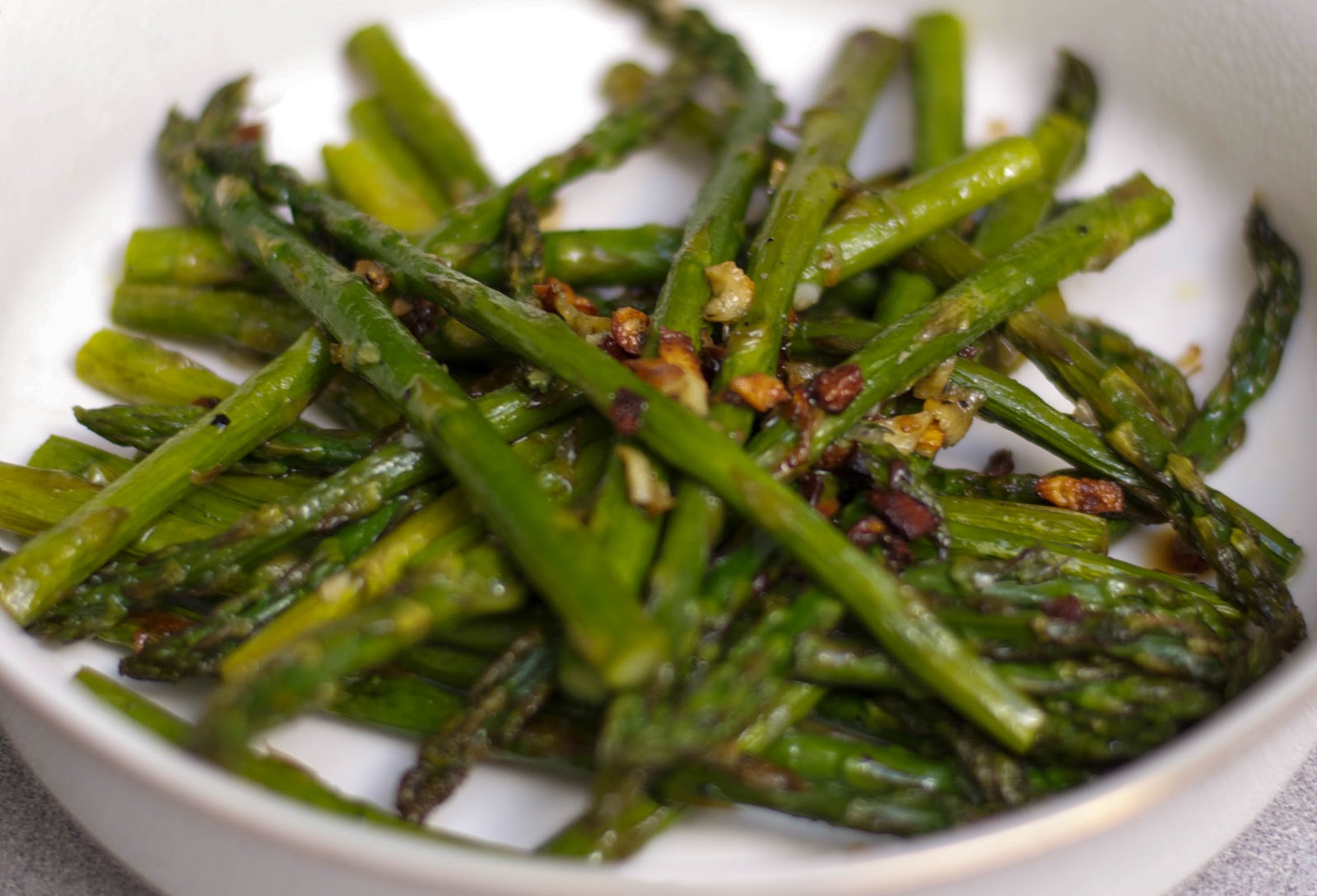
We have been enjoying our asparagus harvest, it's our new kickoff to the season food along with the well established chive bed.  So tender when fresh, and SO easy to prepare.  And SO tempting to grab-


"Read my face, dirt playing season is here"-


Speaking of those chives and what we like them with, we replenished our egg laying operation with four three new RI Red, Delaware cross pullets (one is no longer with us and the investigation goes on to pin point the intruder).  Signs still seem to point to a feral cat.


We also, for the first time, are raising chicks-


In just a few weeks, they have dropped their chicky fuzz and are growing feathers.  We think they are around 5 weeks old.  They should start laying around 18 weeks old.


Typically we buy pullets around 17 weeks old, so our "investment" of $10/pullet starts laying almost as soon as we buy them (a return).  No special equipment is needed at this age either.  We chose to get chicks this year because I have always wanted different varieties, specifically Plymouth Barred Rock Hens.  The other chick varieties we got are New Hampshire Reds and Golden Salmon Maran (we think, or maybe Welsummer).  Hopefully one day we will have the set up to sell eggs to friends.

Last but not least, we also got our piglets for the year!

Three gilts (young females), Landracer and Hampshire crosses.  This is different from our previous year breed- Yorkshire, Hampshire cross.  These girls have much more length in the loins and those cute floppy ears.  Goodness though, they are HUGE for being only 9 weeks.  Our farmer never disappoints us with his stock-


Picture taken by little man-


So like I said, we are up and running, ready for another attempt to grow some of our own food.  I am really behind on sharing what's going on around here, guess I better stop sitting around.


Wednesday, May 7, 2014

New Hens and First Big Planting

Say hello to the newest additions of our farm family....  Red 1, 2 and 3-


Post of what happened to our previous hens HERE.

Three young Rhode Island Reds given to us by a friend.  No names yet because they look so similar.

Somewhat sociable, as much as our last hens I guess.

I did love our heirloom hens that laid colored eggs, but they were not the best layers.  These ladies are very hardy and should lay everyday throughout most of the year.  Not as glamourous but very efficient.
Happy to have fresh eggs in the frig again.


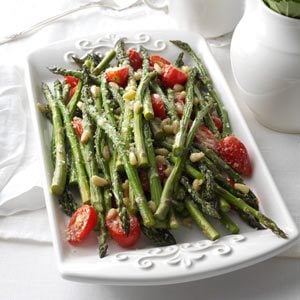
You know what soft eggs and/or over easy eggs go well with.....  Asparagus!
We add some cream sauce too (sometimes with a bit of dijon mustard).  Plenty recipes on the web and I encourage you to give it a try if you have not.
Photo courtesy of Poorgirleatswell.com
Please share your favorite asparagus recipes.  This is another new vegetable for me to use regularly.  I made chicken, asparagus and bell pepper stir fry just tonight.  Kids ate it up.

We are getting lots of strong shoots.  I have made about 3 side dishes worth.


Along with our asparagus shooting up daily (though we are reframing from picking too many since they are young plants building strength) we worked up a section of our garden this past weekend.  We had the garden covered with a clear plastic sheet/tarp (from Lowes) for about a month to help heat the soil and keep it dry.  It worked.  Soil under the plastic was ready to work unlike the soil that was not covered.  Also, our cover crop of winter rye was thicker and taller on the side that was covered, because the soil was warmer (yes, it grew just fine under the plastic laying directly on top of it).  Why a cover crop post HERE.

As you probably know, DO NOT TURN OVER WET SOIL.  Reason why HERE.
Ideally you should turn it over, let it set about a week to allow weeds to rot, add organic matter/fertilizer, then turn it over again before you plant.  We planted immediately after turning it over which will result in us having to pull more weeds in the near future.

The strong man behind the tiller said the soil was much looser and easier to turn over than previous years.


This is what we got planted (still just cool weather plants):
  • More leaf lettuce
  • Radishes (not a fan but giving home grown ones a chance)
  • Carrots
  • Red potatoes
  • Sugar snap peas
  • Beets
  • Garlic (yeah, behind again this year by missing out on planting them in the fall.  hopefully it will still work)


Planting sugar snap peas.  He planted an entire 20' row himself with the help of a 'spacing stick'.


Hope to see some plants popping up anytime now.